
Search Results for: VIPREG2024 how to use 1xbet free bet promo code New Zealand
History
…les. The majority chose Mauritius where they had close ties and were moved between 1968 and 1973. In 1971 the Commissioner, acting under instructions from Ministers in London, enacted an Immigration Ordinance which made it unlawful for a person to enter or remain in BIOT without a permit, and allowed those remaining to be removed. This formalised in law the removal of the existing civilian population of the territory to Mauritius or Seychelles and…
6 June Turtle Exped
…ed in previous years (some as early as 1996). 4. In order to study habitat use by immature turtles within the Diego Garcia lagoon, and whether individuals depart from BIOT to other distant sites, high resolution Fastloc-GPS-Argos satellite tags were used for the first time to assess their movements. During the expedition, 10 satellite tags were attached to eight hawksbill and two green turtles captured at Turtle Cove. Larger individuals (measuring…
7 July Seabird Research Exped – Nelson’s Island
…ntinued to use Red-footed Booby (RFB) as an indicator species, as has been used on DG for two years. For the first time ever in BIOT Brown Booby (BB) were also used as a study species. Building on the two years of ornithological research on DG, the specific objectives of the NI expedition were: Objective 1: To commence the documentation of the year round biology and foraging ecology of breeding RFB and BB at NI. Objective 2: To establish the statu…
9 Nov Turtle Exped
…in previous years (one as long ago as 1999). 6. In order to study habitat use by immature turtles within the Diego Garcia lagoon, and whether individuals depart from BIOT to other distant sites, high resolution Fastloc-GPS-Argos satellite tags were used for the second time to assess their movements. During the expedition, 10 satellite tags were attached to hawksbill turtles captured at Turtle Cove. Larger individuals (measuring over 50 cm curved…
10 Yellowfin Tuna Tagging II
…and DNA analyses to provide information on the trophic ecology and habitat use of species within BIOT and on the patterns of connectivity of elasmobranchs and teleosts regionally. 4. Collect environmental DNA samples from around Diego Garcia. 5. Offer training to the Environment Officer and other interested personnel in tagging methods and the taking and storing of DNA and isotope samples. The expedition again demonstrated that the Morale, Welfare…
2 SV Antsiva
…cies. The ZDF crew were able to secure 7.8 hours of raw footage for their documentary and we secured some recordings for use in podcasts….
BIOT Joins Pioneering Underwater Camera Network
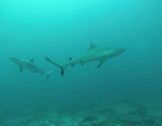
…ss BIOT and provide rare records of the under-sampled intermediate habitat between the reefs and the open ocean. Cefas project lead, Dr Paul Whomersley, said about the new project: The Global Ocean Wildlife Analysis Network will provide UKOTs with a world-first network of stereo-baited remote underwater video systems which will enable us all to better understand the biodiversity, functioning and connectivity of these ocean areas, while providing v…
5 VAVA II Exped
…ance of the acoustic array and the collection of instruments set out on the reef during the earlier Reef 1 expedition. It also afforded a rare opportunity to explore new habitats and pilot new methodologies that may have opportunities for future research in the BIOT MPA….
BIOT WWI Centenary Stamp Issue 11.11.18
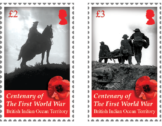
…f the tank, chemical warfare and the further development of the aeroplane. New weapons required new countermeasures; steel helmets, gas masks and anti-aircraft guns. Yet it also saw progress in medicine – the development of plastic surgery, x-rays, blood transfusions, antiseptics and anaesthetics amongst others. Aeroplanes and tanks were not the only significant means of transport in a war that alternated between movement and static fighting. In s…
Conservation Management Plan 2018 – 2023
…istration hosted a workshop in London to begin the process of developing a new Conservation Management Plan for the Territory. The workshop brought together scientists, academics, representatives from non-governmental organisations and experts on conservation management. The aim of the workshop was to identify the major existing and potential threats to the Territory, and establish a strategic approach to combat these pressures. Discussions were a…